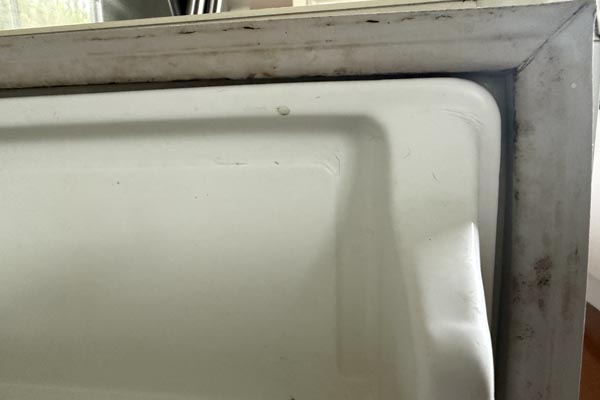
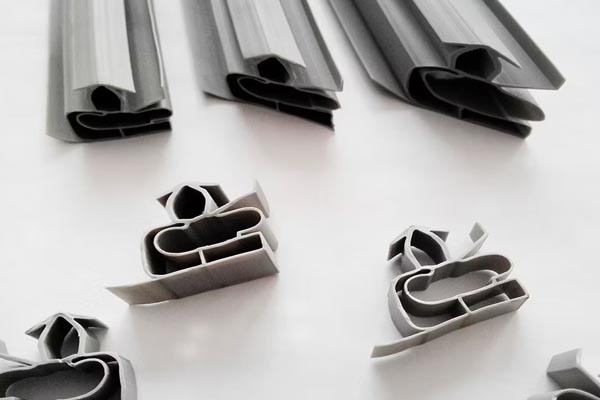
Fridge and freezer door seals are designed to form an airtight barrier that keeps cold air inside and warm air out. Most modern seals include a flexible internal magnet that grips the metal cabinet of your appliance, helping the door close securely every time.
Common Fixing Methods: Push-In vs Screw-In
There are two main ways door seals are attached:
Push-in seals
These fit directly into channels or grooves in the door. The seal has one or more ridges that are pressed firmly into place for a tight fit.
Screw-in seals
These are secured using a mounting plate that is screwed or riveted to the door. The seal sits between the plate and the door, forming a tight barrier once fastened.
Popular Seal Profiles Explained
Different door seals use different profiles depending on the fridge design:
- Push-in profile – Features ridges that press into a groove in the door.
- Dart profile – A variation of the push-in design shaped like an arrowhead. It compresses as it’s inserted, then expands to lock into place.
- Flap and lip profile – Common on screw-in seals, designed to grip under a mounting plate when tightened.
- Clip-on seals – Fasten to the edge of the door rather than fitting into a channel.
- Slide-in designs – Feed into a track along the door.
- T-profile seals – Use a T-shaped spine that locks into a slot.
Magnetic vs Compression Sealing
Not all seals rely on magnets.
- Magnetic seals are the most common and use an internal magnet to stick to the fridge body.
- Compression seals rely on the material’s flexibility to compress and form an airtight barrier (often with a half-moon shape).
- Adhesive strip seals use a peel-and-stick backing and are often made from foam.
Materials Used in Door Seals
Most fridge door seals are made from PVC, but other materials are also used depending on the application, including:
- Rubber compounds
- Silicone
- EPDM
- Neoprene
Knowing what your existing seal is made from can make it easier to find the correct replacement.
Signs Your Door Seal Needs Replacing
A worn or damaged seal can lead to higher running costs and reduced cooling performance. Look out for these warning signs:
- Your fridge is using more electricity than usual
- Moisture or mould is forming inside
- The door won’t stay properly closed
- Visible cracks, splits, or tears in the seal
- A banknote placed between the door and cabinet slips out easily
Sometimes a thorough clean can restore performance—but if not, replacing the seal promptly will reduce strain on your compressor and stop warm, moist air from entering the fridge.
How we Choose the Right Replacement Seal
With so many profiles and materials available, identifying the correct seal can be tricky if our database does not have a listing. The best approach is to:
- We will examine your existing seal
- Measure the profile carefully
- Match it against a profile identification guide
Following these steps will help ensure you get the right fit and restore your fridge to peak efficiency.